Miss Maggie

Life of Mary Magdalene: Mary Magdalene Speaking to the Angels By Giotto di Bondone 1320s - I'd say the girl is always unclothed but hairy enough.
Life of Mary Magdalene: Mary Magdalene Speaking to the Angels By Giotto di Bondone 1320s - I'd say the girl is always unclothed but hairy enough.


John Anster Christian Fitzgerald's : The Stuff that Dreams are Made of from the Illusions @ celtic twilight
Raphael or Raffaello (April 6, 1483 – April 6, 1520) was an Italian master painter and architect of the Florentine school in High Renaissance, celebrated for the perfection and grace of his paintings.
The inscription in his marble sarcophagus, a distichon written by Pietro Bembo, reads: "Ille hic est Raffael, timuit quo sospite vinci, rerum magna parens et moriente mori." Meaning (according to the sign beside it) : "Here lies Raffaello who, when alive, Nature was afraid to be won by him, when he died, she wanted to die herself".
- The only guy I know that died for his birthday.
The High Renaissance is a rather subjective art term denoting the culmination of the Italian Renaissance art between 1500 and 1525.
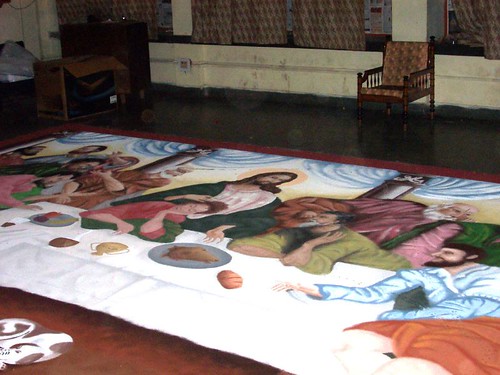
The High Renaissance painting is generally held to have been born in the late 1490s, when Leonardo da Vinci executed his Last Supper in Milan.
Source : WP.


I shall need a certain amount of time to see and show how medieval iconography, with its subjects, themes and archetypes borrowed from sacred authors, is the major source for things as different (but are they ?) as tarot cards or Lord of the Rings and Da Vinci Code’s favourite places and plots … Examples follow. See here some Cena's Magdalene.
See also that Bible people of those times did love braids, knots ans quintefoils, were they christians, irish monks, jews or muslims.
Some of you readers might like to give me hints - my only source for now is “turning the pages” offered by the British Library.